QUEER/ING Proposal for
Designing Justice + Designing Spaces
April 2026
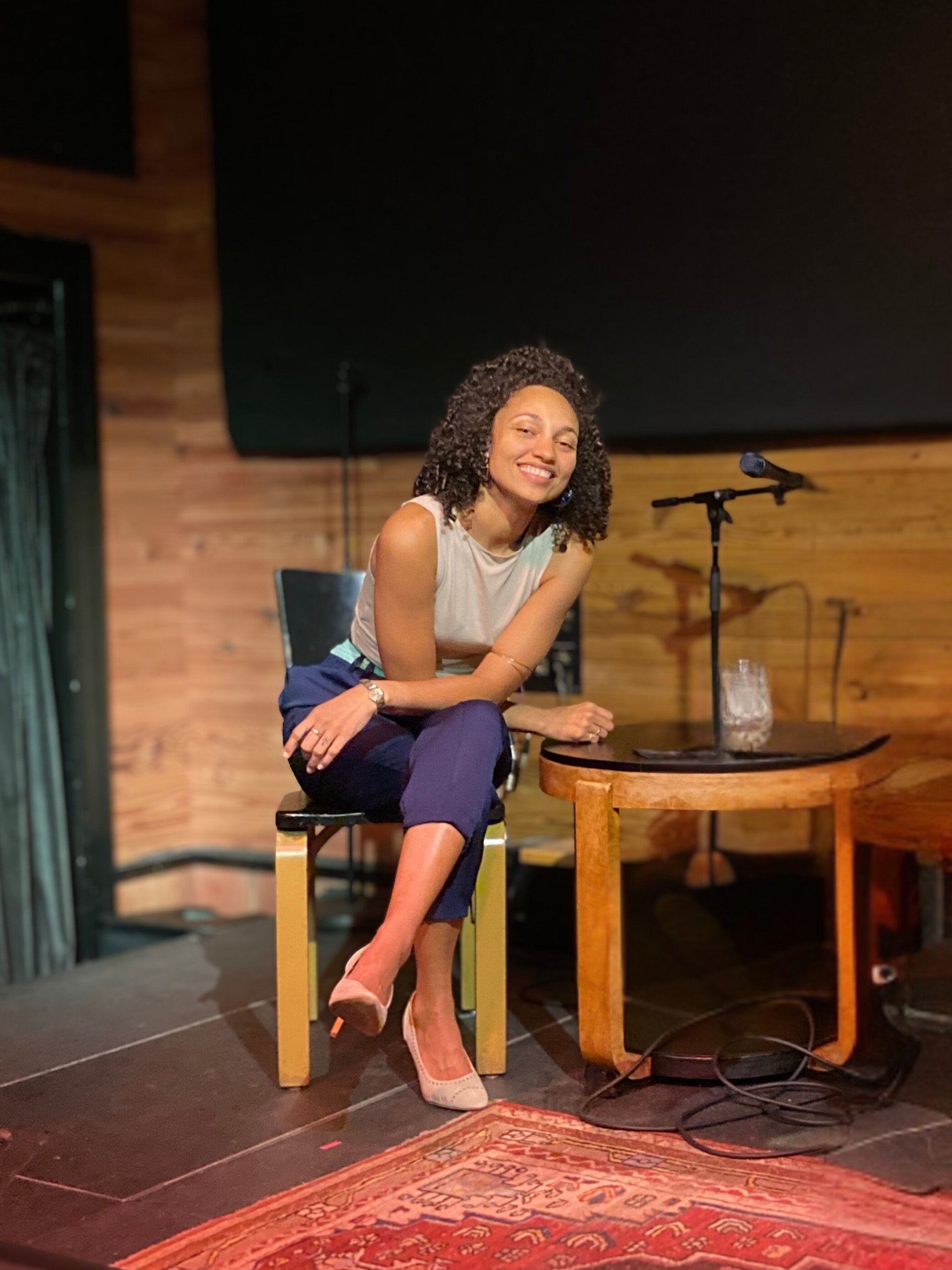
Meet Your Facilitator
Shakira Smith, PhD (she/they), is a Black, queer psychologist, dual-PhD scholar, and Research Director for Salty’s Algorithmic Bias Collective. Their work is rooted in liberatory praxis, informed by both relational and critical theory, and grounded through participatory worldbuilding with marginalized clients and communities.
Drawing from clinical practice, research, and facilitation, Dr. Smith brings a systems-oriented approach to working with organizations that attends to interpersonal dynamics and the structural conditions shaping them. The movement roles that she most identifies with are the guide or healer, the visionary, and the storyteller.
QUEER/ING Design:
Community Readiness Engagement
This engagement is designed to strengthen how teams prepare for and participate in community-facing work where trust, accountability, and responsiveness are essential. Its core aim is to help teams better understand what shapes community experience and how to respond to it in practice.
This work centers the concept of queer as both condition and action, grounded in a critical approach. “Queer as condition” refers to how difference, power, and context shape lived experience and interpretation. “Queer as action” refers to how we actively respond: adapting how we assess, engage, and produce for folks with limited systemic power.
We'll examine how dominant assumptions, norms, and “standard” ways of working shape what happens in practice—often in ways that are taken as neutral. Finally, we'll consider how we can use these critiques to transform how teams show up, how misalignment can be prevented, and how to build internal processes that support responsive engagement over time.
This engagement is led by Dr. Smith, with support from a trans collaborator contributing additional perspective and co-facilitation in select portions of the work.
Engagement Options
Embedded Support (Ongoing, Done With You)
Advisory / Community Liaison — Ongoing, retainer-based support for active and upcoming projects
Capacity Building (Structured Training for Your Team)
Phase 1 — Core Training & Analysis (Queer as Condition)
Phase 2 — Applied Practice & Design Intersections (Queering as Action)
Phase 3 — Structural Readiness & Process Development
Available as: Phase 1 only, Phases 1 + 2, or Full engagement (Phases 1–3)
Offer Details
Ongoing Advisory / Community Liaison
$5,500/month (3-month minimum)

Provide ongoing support as a thought partner and liaison in relation to the communities you serve, offering real-time guidance on engagement, decision-making, and project direction.
This role focuses on helping your team navigate active and upcoming work with greater clarity, responsiveness, and accountability—grounded in an ongoing understanding of community context rather than one-time training.
Included
• Regular check-ins to review active and upcoming projects
• Ongoing guidance on engagement strategy, communication, and approach
• Real-time support in decision-making, especially in moments of uncertainty or tension
• Acting as a relational bridge and accountability partner in how work is shaped in response to community context
Phase 1 — Core Training & Analysis (Queer as Condition/Context)
$10,000Establish a shared foundation for how your team approaches community engagement, with a focus on understanding how identity, power, and lived experience shape expectations, interpretation, and impact.Included
• Leadership alignment conversations to understand context and current practices
• A core training session for staff (2–3 hours)
• Targeted customization based on your current project work
Questions this phase helps answer • What actually happened in the recent engagement and where did breakdowns occur?
• What does it mean to “show up” beyond having the right language?
• Where are we relying on standardized or “best practice” approaches that may not fit the communities we are working with?
• How are Black and trans communities likely to experience or interpret this engagement, given broader social and historical context?
• What does meaningful engagement with Black and trans communities require in practice (and theory)?
• How do we respond in real time when impact diverges from intention?OutcomeA shared baseline across staff for recognizing breakdowns, identifying underlying assumptions, and improving how teams engage in marginalized community spaces.Phase 2 — Applied Practice & Design Intersections (Queer as Action/Verb)
$15,000Apply core concepts through real-world scenarios and explore how relational awareness informs decision-making, spatial design, and implementation. Introduce queering as a method for transforming dominant and default approaches to production; apply the method in practice to examine and revise design and architectural processes in response to community needs.Included
• Scenario-based practice sessions using real or representative engagement situations. Practice navigating feedback, misalignment, and repair in real time.
• A design-focused workshop on the practice of queering what we might produce for marginalized communities.
• Optional coordination with design partners (i.e., Open Architecture)
Questions this phase helps answer • What actually happened in the recent engagement and where did breakdowns occur? • What does it mean to “show up” beyond having the right language? • Where are we relying on standardized or “best practice” approaches that may not fit the communities we are working with? • How are Black and trans communities likely to experience or interpret this engagement, given broader social and historical context? • What does meaningful engagement with Black and trans communities require in practice (and theory)? • How do we respond in real time when impact diverges from intention?OutcomeA shared baseline across staff for recognizing breakdowns, identifying underlying assumptions, and improving how teams engage in marginalized community spaces.Phase 3 — Structural Readiness & Process Development
$12,000

Refine internal structures to support more consistent, intentional engagement across projects. Reduce the likelihood of future misalignment by addressing change at the structural level so that teams are not relying on individual awareness or skill alone.
Included
• Review of current project intake and engagement processes
• Development of a Community Readiness Framework tailored to your work
• A practical tool/checklist to guide decision-making before and during engagements
• Final session to review and apply the framework to real scenarios or upcoming projects
Questions this phase helps answer • How do we assess whether we’re prepared to engage with a particular community?
• What do we need to know—or have in place—before entering a space?
• Where are our current processes constraining what kinds of engagement or outcomes are possible?
• Where are we asking individuals to compensate for gaps or limitations in our processes?
• When should we pause, seek additional support, or reconsider approach?
• How do we staff projects in ways that align with the communities involved?
• How do we make these decisions consistently across teams and projects?OutcomeClear processes and tools that support better preparation, more consistent decision-making, and reduced likelihood of breakdowns in future engagements.Next Steps
Confirm initial scope of engagementCollect and share additional context from staff involved in the original engagementFinalize timeline and schedulingIn solidarity,